Optimal High-Quality Plasmid Extraction From Escherichia Coli Bacteria using TB Medium

Yuxia Qin 1 , Ye Xiong 2 and Xiaoju Liu 2

1 School of Life Science, Xuzhou Medical University, Xuzhou, Jiangsu, China
2 The Second Hospital of Jilin University, Changchun City, Jilin, China

ABSTRACT
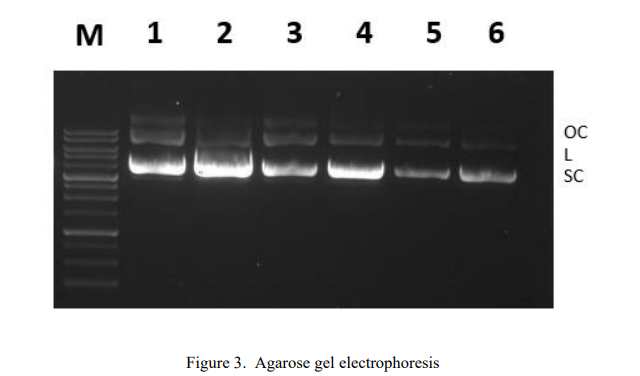
Plasmid DNA extraction is a fundamental technique in molecular biology and biomedicine. While traditional methods based on Luria–Bertani (LB) medium are sufficient for routine laboratory applications, many advanced downstream uses—such as transfection, gene therapy, and DNA vaccination—require large quantities of plasmid DNA with high purity and structural integrity. In this study, we systematically evaluated Terrific Broth (TB) as an alternative culture medium to enhance plasmid yield and quality in Escherichia coli. Cultures grown in TB achieved significantly higher cell densities and produced markedly increased plasmid yields compared with LB-grown cultures. Agarose gel electrophoresis confirmed that plasmid DNA extracted from TB cultures was predominantly in the supercoiled form with minimal degradation. Furthermore, several practical protocol modifications— including direct inoculation from frozen stocks, controlled freezing–thawing of bacterial pellets, and optimized elution strategies—reduced processing time and overall cost while improving yield. Collectively, these results demonstrate that TB medium is a robust and efficient platform for producing high-quality plasmid DNA suitable for demanding molecular and biomedical applications.

KEYWORDS
Plasmid Extraction, Escherichia coli, Terrific Broth; DNA yield; supercoiled plasmid.

Volume url; https://wireilla.com/ijbb/vol16.html
PDF URL; https://wireilla.com/papers/ijbb/V16N1/16126ijbb01.pdf
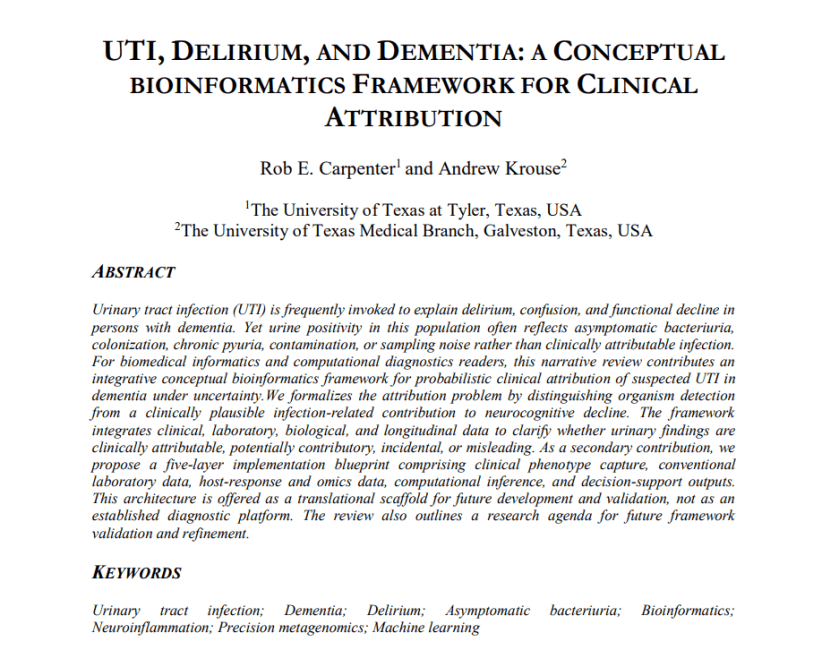
UTI, Delirium, and Dementia: A Conceptual Bioinformatics Framework for Clinical Attribution

Authors

Rob E. Carpenter1 and Andrew Krouse21 The University of Texas at Tyler, USA, 2 The University of Texas Medical Branch, USA

Abstract

Urinary tract infection (UTI) is frequently invoked to explain delirium, confusion, and functional decline in persons with dementia. Yet urine positivity in this population often reflects asymptomatic bacteriuria, colonization, chronic pyuria, contamination, or sampling noise rather than clinically attributable infection. For biomedical informatics and computational diagnostics readers, this narrative review contributes an integrative conceptual bioinformatics framework for probabilistic clinical attribution of suspected UTI in dementia under uncertainty.We formalizes the attribution problem by distinguishing organism detection from a clinically plausible infection-related contribution to neurocognitive decline. The framework integrates clinical, laboratory, biological, and longitudinal data to clarify whether urinary findings are clinically attributable, potentially contributory, incidental, or misleading. As a secondary contribution, we propose a five-layer implementation blueprint comprising clinical phenotype capture, conventional laboratory data, host-response and omics data, computational inference, and decision-support outputs. This architecture is offered as a translational scaffold for future development and validation, not as an established diagnostic platform. The review also outlines a research agenda for future framework validation and refinement.

Keywords

Urinary tract infection; Dementia; Delirium; Asymptomatic bacteriuria; Bioinformatics; Neuroinflammation; Precision metagenomics; Machine learning

VOLUME URL; https://wireilla.com/ijbb/vol16.html

PDF URL; https://wireilla.com/papers/ijbb/V16N2/16226ijbb01.pdf

Biologically Inspired Design Framework for Robot in Dynamic Environments Using Framsticks 

Raja Mohamed S1 and Raviraj P2
1Associate Professor, Department of CSE, SVECW, Bhimavaram, India

2Professor, Department of CSE, KKIT, Coimbatore, India

ABSTRACT
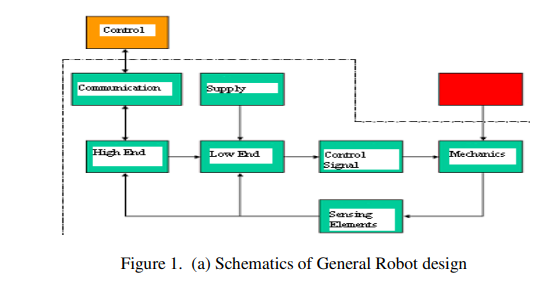
Robot design complexity is increasing day by day especially in automated industries. In this paper we propose biologically inspired design framework for robots in dynamic world on the basis of Co-Evolution, Virtual Ecology, Life time learning which are derived from biological creatures. We have created a virtual khepera robot in Framsticks and tested its operational credibility in terms hardware and software components by applying the above suggested techniques. Monitoring complex and non complex behaviors in different environments and obtaining the parameters that influence software and hardware design of the robot that influence anticipated and unanticipated failures, control programs of robot generation are the major concerns of our techniques.


KEYWORDS
Biology, Khepera, Framsticks, Framework, Simulation.

Volume url; https://wireilla.com/ijbb/vol1.html

pdf url; https://wireilla.com/papers/ijbb/V1N1/1011ijbb03.pdf

Identification of MOTIFS in Bioactive Peptides Precursors 

Shrikant Sharma 1, Shashank Rana

Research Scholars, School of Life Science, Singhania University, Jhunjhunu

Raghvendar Singh

2Professor, Bioinformatics Facility, Department of Immunology, College of
Biotechnology, Sardar Vallabh Bhai Patel University of Agriculture & Technology. Meerut

Ravi Uniyal3

3Senior Resident, LLRM Medical College, Meerut

Abstract
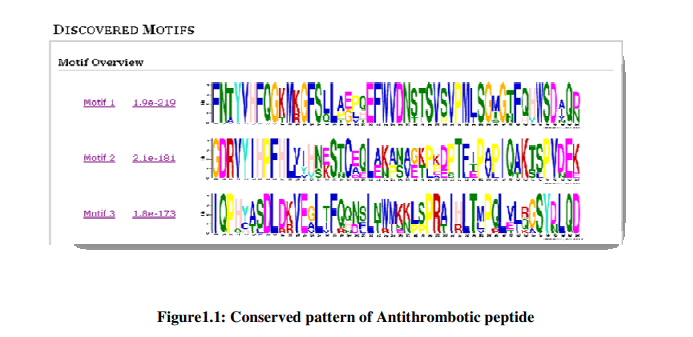
In-silico study was carried out to study motifs present in precursors of antimicrobial, antithrombotic, casein derived and mineral binding bioactive peptides by using online servers. MEME suite was used for defining the common consensus pattern present in bioactive peptides precursors. It was found that although three different consensus patterns was identified in precursors but theses consensus pattern overlapped in many sequences and all three motifs may be present in many peptides precursor sequences.


Keywords
In-Silico study, Bio-active peptides, MEME Suite, Consensus pattern.

Volume url; https://wireilla.com/ijbb/vol1.html

PDF URL; https://wireilla.com/papers/ijbb/V1N1/1011ijbb02.pdf

Adaptive Control and Synchronization of a Generalized Lotka-Volterra System

Sundarapandian Vaidyanathan1

1Research and Development Centre, Vel Tech Dr. RR & Dr. SR Technical University
Avadi, Chennai-600 062, Tamil Nadu, INDIA

ABSTRACT
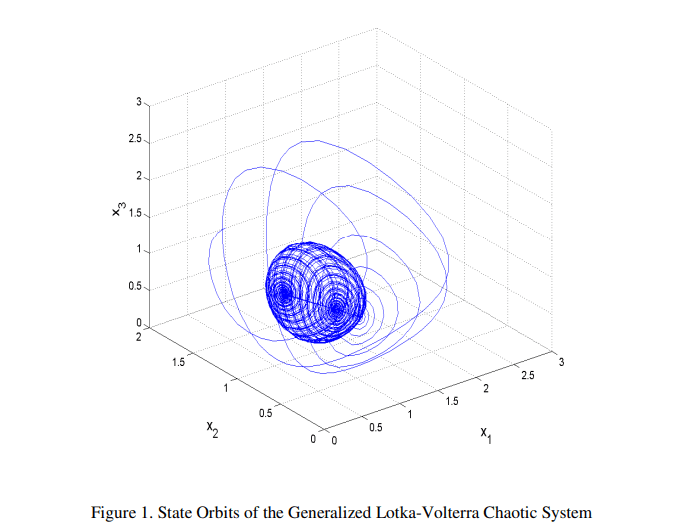
The Lotka-Volterra equations are a system of equations proposed to provide a simplified model of twospecies predator-prey population dynamics. In this paper, we investigate the problem of adaptive chaos control and synchronization of a generalized Lotka-Volterra system discovered by Samardzija and Greller (1988). The Samardzija-Greller model is a two-predator, one-prey generalization of the Lotka-Volterra system. First, adaptive control laws are designed to stabilize the generalized Lotka-Volterra system to its unstable equilibrium point at the origin based on the adaptive control theory and Lyapunov stability theory. Then adaptive control laws are derived to achieve global chaos synchronization of identical generalized Lotka-Volterra systems with unknown parameters. Numerical simulations are shown to validate and demonstrate the effectiveness of the proposed adaptive control and synchronization schemes for the generalized Lotka-Volterra system.


KEYWORDS
Adaptive Control, Stabilization, Chaos Synchronization, Generalized Lotka-Volterra Chaotic System.

Volume URL; https://wireilla.com/ijbb/vol1.html

PDF URL; https://wireilla.com/papers/ijbb/V1N1/1011ijbb01.pdf

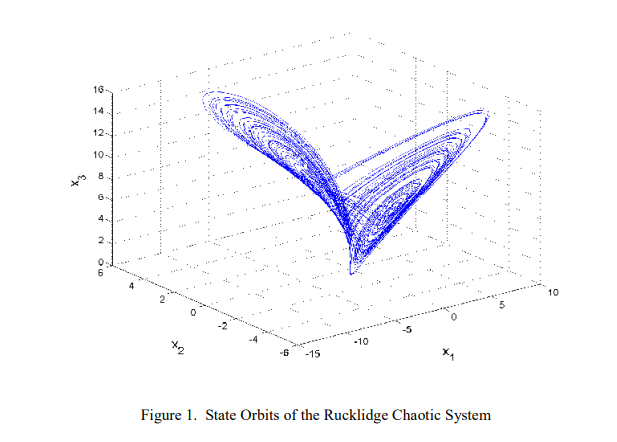
Sliding Mode Controller Design for The Global Chaos Synchronization of Rucklidge Chaotic Systems

Sundarapandian Vaidyanathan1
1Research and Development Centre, Vel Tech Dr. RR & Dr. SR Technical University Avadi, Chennai-600 062, Tamil Nadu, INDIA

ABSTRACT
This paper describes the design of sliding mode controller for the global chaos synchronization of identical Rucklidge chaotic systems (Rucklidge, 1992). Rucklidge chaotic system is one of the paradigms of threedimensional chaotic systems. The stability results derived in this paper for the complete synchronization of the identical Rucklidge chaotic systems via sliding mode control are established using Lyapunov stability theory. Since the Lyapunov exponents are not required for these calculations, the sliding mode control method is very effective and convenient to achieve global chaos synchronization of Rucklidge chaotic systems. Numerical simulations are presented to demonstrate the effectiveness of to the synchronization
schemes derived in this paper for the identical Rucklidge chaotic systems.

KEYWORDS
Sliding Mode Control, Chaos Synchronization, Chaotic Systems, Rucklidge Systems.

Volume URL; https://wireilla.com/ijbb/vol2.html

PDF URL; https://wireilla.com/papers/ijbb/V2N1/2112ijbb03.pdf

E-Passport Scheme using Authentication Protocols along with Face, Fingerprint, Palmprint and Iris biometrics

1 V.K. Narendira Kumar and 2 B. Srinivasan
1Assistant Professor, Department of Information Technology,
2Associate Professor, PG & Research Department of Computer Science,
Gobi Arts & Science College (Autonomous),
Gobichettipalayam – 638 453, Erode District, Tamil Nadu, India.


ABSTRACT
Electronic passports have known a wide and fast deployment all around the world since the International Civil Aviation Organization the world has adopted standards whereby passports can store biometric identifiers. The use of biometrics for identification has the potential to make the lives easier, and the
world people live in a safer place. The purpose of biometric passports is to prevent the illegal entry of traveler into a specific country and limit the use of counterfeit documents by more accurate identification of an individual. This paper analyses the face, fingerprint, palmprint and iris biometric e-passport design. This papers focus on privacy and personal security of bearers of e-passports, the actual security benefit countries obtained by the introduction of e-passports using face, fingerprint, palmprint and iris recognition systems. Researcher analyzed its main cryptographic features; the face fingerprint, palmprint and iris biometrics currently used with e-passports and considered the surrounding procedures. The paper also provides a security analysis of the e-passport using face fingerprint, palmprint and iris biometric that are intended to provide improved security in protecting biometric information of the epassport bearer.


KEYWORDS
E-Passport, Biometrics, Cryptographic, Face, Fingerprint, Palmprint and Iris

Intra-Body Hybrid Communication Scheme for Healthcare Systems

Abdullah Alshehab1 ,Chiu Tung Wu1 , Nao Kobayashi1 ,Sikieng Sok1 , Shigeru Shimamoto1
1Graduate School of Information and Telecommunication Studies,
Waseda University, Tokyo, JAPAN

ABSTRACT
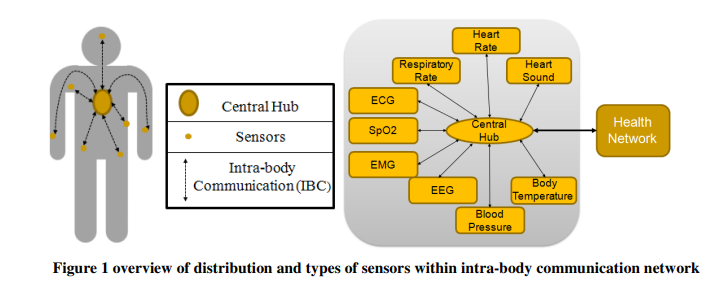
Intra-body communication (IBC) is a type of Body Area Network (BAN)that utilizes human body as the medium for data transmission. Thelow power requirements of intra-body communication (IBC) as compared to near field electromagnetic waves showed that it can be a suitable solution for Medical Body AreaNetworks (MBANs) in a mobile health care system.In this paper, we investigate the transmission characteristicsof the human body as a conductor of signals byconsidering different datatransmission rates of multi-point to point network in order to reduce overall power consumption of the BAN.Furthermore, we utilize IBC and propose a new scheme to combines Slotted ALOHA, TDMA, and Reservation ALOHA together to increase the throughput and decrease the delay. By using our new hybrid scheme with the movable boundary designed for health status monitoring, we are able to increase the efficiency of data transmission by prioritizing the more critical data from the sensors.


KEYWORDS
Body area network, Intra-body communications, Hybrid communication scheme,

Volume URL; https://wireilla.com/ijbb/vol2.html

PDF URL; https://wireilla.com/papers/ijbb/V2N1/2112ijbb01.pdf

Design a site like this with WordPress.com
Get started