Human Gait Model for Automatic Extraction andDescription for Gait Recognition

Ashish Bhangale1 , Navneet Manjhi2 and Jyoti Bharti3

1Research Scholar, CSE Dept. MANIT-Bhopal, India

2Research Scholar, CSE Dept. MANIT-Bhopal, India

3Asst. Professor, CSE Dept., MANIT-Bhopal, India

ABSTRACT
The gait signature is extracted directly from the evidence gathering process. This is possible by using a Fourier series to describe the motion of the upper leg and apply temporal evidence gathering techniques to extract the moving model from a sequence of images. The improved classification capability of the phase-weighted magnitude information is verified using statistical analysis of the separation of clusters in the feature space. Furthermore, the technique is shown to be able to handle high levels of occlusion, which is of especial importance in gait as the human body is self-occluding. As such, a new technique has been developed to automatically extract and describe a moving articulated shape, the human leg, and shown its potential in gait as a biometric.


KEYWORDS
Fourier series, sequence of images, classification, phase-weighted magnitude, statistical analysis, occulation, articulated shape, biometric, VHT, HVHT, GAVHT, GA, SHT, CCD, FS & HHT

VOLUME URL; https://wireilla.com/ijbb/vol2.html

PDF URL; https://wireilla.com/papers/ijbb/V2N2/2212ijbb02.pdf

Optimal High-Quality Plasmid Extraction From Escherichia Coli Bacteria using TB Medium

Yuxia Qin 1 , Ye Xiong 2 and Xiaoju Liu 2
1 School of Life Science, Xuzhou Medical University, Xuzhou, Jiangsu, China
2 The Second Hospital of Jilin University, Changchun City, Jilin, China

ABSTRACT
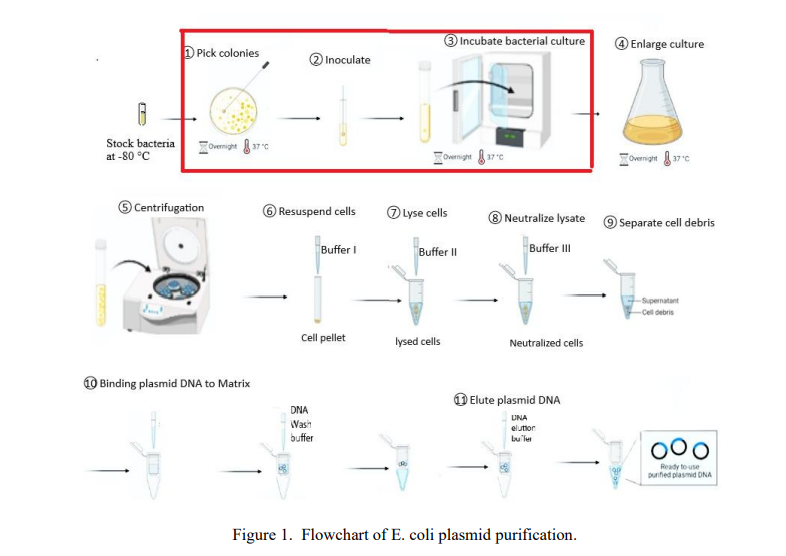
Plasmid DNA extraction is a fundamental technique in molecular biology and biomedicine. While traditional methods based on Luria–Bertani (LB) medium are sufficient for routine laboratory applications, many advanced downstream uses—such as transfection, gene therapy, and DNA vaccination—require large quantities of plasmid DNA with high purity and structural integrity. In this study, we systematically evaluated Terrific Broth (TB) as an alternative culture medium to enhance plasmid yield and quality in Escherichia coli. Cultures grown in TB achieved significantly higher cell densities and produced markedly increased plasmid yields compared with LB-grown cultures. Agarose gel electrophoresis confirmed that plasmid DNA extracted from TB cultures was predominantly in the supercoiled form with minimal degradation. Furthermore, several practical protocol modifications— including direct inoculation from frozen stocks, controlled freezing–thawing of bacterial pellets, and optimized elution strategies—reduced processing time and overall cost while improving yield. Collectively, these results demonstrate that TB medium is a robust and efficient platform for producing high-quality plasmid DNA suitable for demanding molecular and biomedical applications.

Volume URL; https://wireilla.com/ijbb/vol16.html

PDF URL; https://wireilla.com/papers/ijbb/V16N1/16126ijbb01.pdf

Docking Studies on HIV Integrase InhibitorsBased On Potential Ligand Binding Sites

Subhomoi Borkotoky*
Centre for bioinformatics, Pondicherry University, Puducherry, India

Abstract
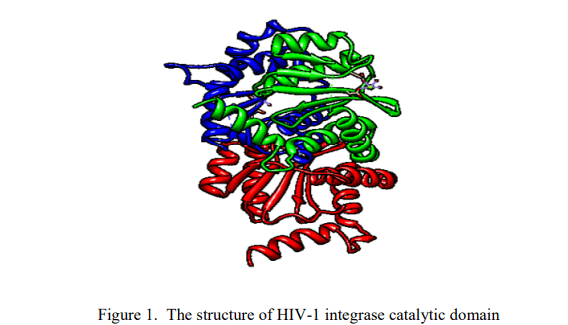
HIV integrase is a 32 kDa protein produced from the C-terminal portion of the Pol gene product, and is an attractive target for new anti-HIV drugs. Integrase is an enzyme produced by a retrovirus (such as HIV) that enables its genetic material to be integrated into the DNA of the infected cell. Raltegravir and Elvitegravir are two important drugs against integrase.


Keywords
Integrase, Chemsketch, Virtual screening.

Volume URL; https://wireilla.com/ijbb/vol2.html

PDF URL; https://wireilla.com/papers/ijbb/V2N3/2312ijbb03.pdf

Geo-Ontology and Geographical Information System Extended by a first-order logic language: Application to malaria control 


Guillaume Koum[1]Josiane Etang [2],[3]
[1] Département d’Informatique. Ecole Nationale Supérieure Polytechnique. B.P. 8390
Yaoundé, Cameroun
[2] Organisation de Coordination pour la lutte contre les Endémies en Afrique Centrale
B.P. 288 Yaoundé, Cameroun
[3] Faculté de Médecine et de Sciences pharmaceutiques. Université de Douala, B.P.
2701 Douala, Cameroun

c

Abstract
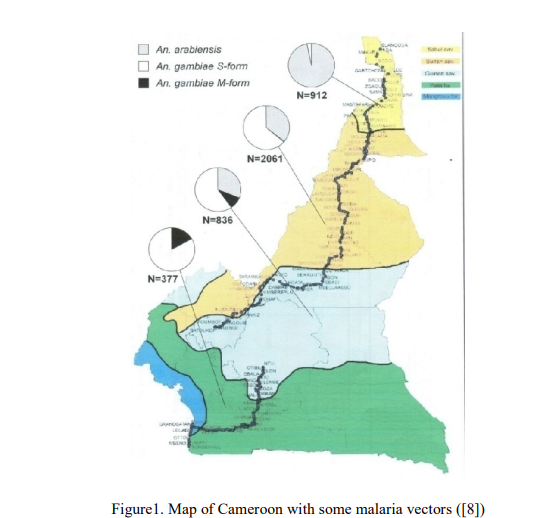
A geo-ontology can be built around a Geographic Information System (GIS) and enriched with a firstorder logic language under the closed-world assumption (CWA). This extended system provides knowledge representation formalisms that are aimed to describe general conceptual information. They can also be used in the construction of the knowledge base of a reasoning tool. In this paper an environment is defined where a geo-ontology offers possibilities with a system that allows users to represent and reason about some aspects of the real world. With respect to the added intelligence; knowledge is preserved and enhanced. Knowledge enhancement is performed under the CWA in a subset of the first-order logic language. A geo-reasoning task is undertaken so that a GIS and a geo-ontology are integrated in what can correspond to a natural language processing system. The framework is implemented to demonstrate geo-ontology’s ability to enhance knowledge in malaria control domain.


Keywords: geographic information system, geo-ontology; closed-world assumption, geo-reasoning,
malaria control.


Volume url; https://wireilla.com/ijbb/vol2.html

PDF URL; https://wireilla.com/papers/ijbb/V2N3/2312ijbb01.pdf

IDENTIFICATION OF CONSERVED FUNCTIONAL MOTIFS IN LACTOFERRIN USING MEME


* Shashank Rana1

Shrikant Sharma1

1. Research Scholar, Bioinformatics Facility, Department of Immunology, College of Biotechnology, Sardar VallabhBhai Patel University of Agriculture & Technology. Meerut (U.P.)

Raghvendar Singh2 

2. Head of Department, Bioinformatics Facility, Department of Immunology, College of Biotechnology, SardarVallabhBhai Patel University of Agriculture & Technology. Meerut (U.P.)

VOLUME URL; https://wireilla.com/ijbb/vol2.html

PDF URL; https://wireilla.com/papers/ijbb/V2N4/2412ijbb03.pdf

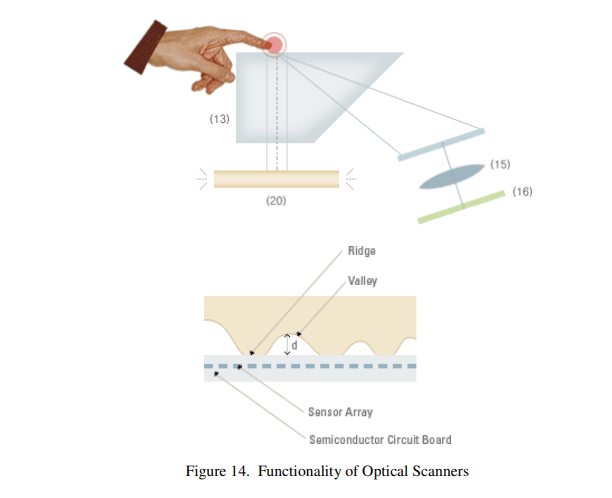
DESIGNING A NOVEL APPROACH FOR FINGERPRINT BIOMETRIC DETECTION: BASED ON MINUTIAE EXTRACTION

Hossein Jadidoleslamy

Information Technology Engineering Group, Department of Information Technology,
Communications and Security,
University of Malek Ashtar, Tehran, Iran


ABSTRACT
People authentication based on fingerprint is one of the most important people authentication techniques which it used biology specifications. The main purpose of this paper is discussing on minutiae-based extraction methods for fingerprints comparison and presenting a new pattern matching algorithm in this area; of course, this algorithm also has been presented based on comparing fingerprint features (especially minutiae points).


KEYWORDS
Biometric, Fingerprint, Minutiae, Automated Fingerprint Identification System (AFIS), Extraction, Matching

VOLUME URL; https://wireilla.com/ijbb/vol2.html

PDF URL; https://wireilla.com/papers/ijbb/V2N4/2412ijbb02.pdf

BIOMETRIC SYSTEM PENETRATION IN RESOURCE
CONSTRAINED MOBILE DEVICE

M.SUJITHRA1 AND DR G. PADMAVATHI 2
1Assistant Professor, Department of Computer Technology & Applications,
Coimbatore Institute of Technology,
2Professor& Head, Department of Computer Science,
Avinashilingam Institute for Home Science and Higher Education for Women,
Coimbatore, Tamil Nadu, India.

ABSTRACT
Over the past few years, the usage of mobile devices to access data hasbecoming more frequent, and the usage of mobile devices in the applications such as web-browsing, email, multimedia, entertainment applications (games, videos, and audios), navigation, trading stocks, electronic purchase, banking and health care are increased, therefore data security is essential and also it becomes a challenge in securing the data in the mobile device. User authentication schemes such as Password or Personal Identificatio Number (PIN) based authentication in mobile device is a difficult process for providing safe access to precious, private information or personalized services. To address these problems in the mobile devices, biometric system can be developed which are more secure, affordable and memorable authentication scheme based on graphical assistance, images and audio. We believe that biometric authentication is the most secure approach among other authentication mechanism. This paper discusses the various features of biometrics and mobile device security threats.

KEYWORDS
Biometrics, Mobile Device, Authentication, Threats, Security

Volume URL; https://wireilla.com/ijbb/vol3.html

PDF URL; https://wireilla.com/papers/ijbb/V3N1/3113ijbb04.pdf

SRAMM: SHORT READ ALIGNMENT MAPPING METRICS

Alvin Chon and Xiaoqiu Huang

1Bioinformatics and Computational Biology Graduate Program, Iowa State
University, Ames, IA 50010, USA
2Department of Computer Science, Iowa State University, Ames, IA 50010, USA

ABSTRACT

Short Read Alignment Mapping Metrics (SRAMM): is an efficient and versatile command line tool providing additional short read mapping metrics, filtering, and graphs. Short read aligners report MAPing Quality (MAPQ), but these methods generally are neither standardized nor well described in literature or software manuals. Additionally, third party mapping quality programs are typically computationally intensive or designed for specific applications. SRAMM efficiently generates multiple different concept-based mapping scores to provide for an informative post alignment examination and filtering process of aligned short reads for various downstream applications. SRAMM is compatible with Python 2.6+ and Python 3.6+ on all operating systems. It works with any short read aligner that generates SAM/BAM/CRAM file outputs and reports ‘AS’ tags. It is freely available under the MIT license at http://github.com/achon/sramm.

KEYWORDS

Bioinformatics, ngs, short read alignments, mapq, quality filtering

For More details: https://wireilla.com/papers/ijbb/V11N2/11221ijbb01.pdf

TI Implant Hole Quality Improvement with new Tool Designed

Quanli Han and Dongchen Han

ABSTRACT
Ti-implant is drilled to get hole in nearly each operation and hole quality took great effect on success of operation .This paper aims at the research of drilling characteristics of through hole on ti-implant, specially the macro-burrs formed after drilling which determined the cost of implant largely. Series experiments were conducted to analysis the effect of processing parameter on formed burr, particularly the axial feed, had a great effect on volume burr. Experiments finds that, the volume of burr at hole entrant is less than that at hole exit, and the burr volume has great effect on workpiece quality and product cost, the burr height formed easily decreases because great attention from scholars and engineers has been paid to, while the burr width size despised naturally plays a great influence on product quality and machining cost. Finally, The new de-burring tool are designed and applied in experiment, the decrease in burr width is obviously found, so the removal of burrs becomes much little than that gotten in traditional tool. The result indicates a promising future of de-burring in practical application.

KEYWORDS

Drilling, Burr, De-Burr, Hole Exit, Hole Entrance.

For More Details: https://wireilla.com/papers/ijbb/V9N1/9119ijbb01.pdf

Design a site like this with WordPress.com
Get started